
A More Natural Vitamin
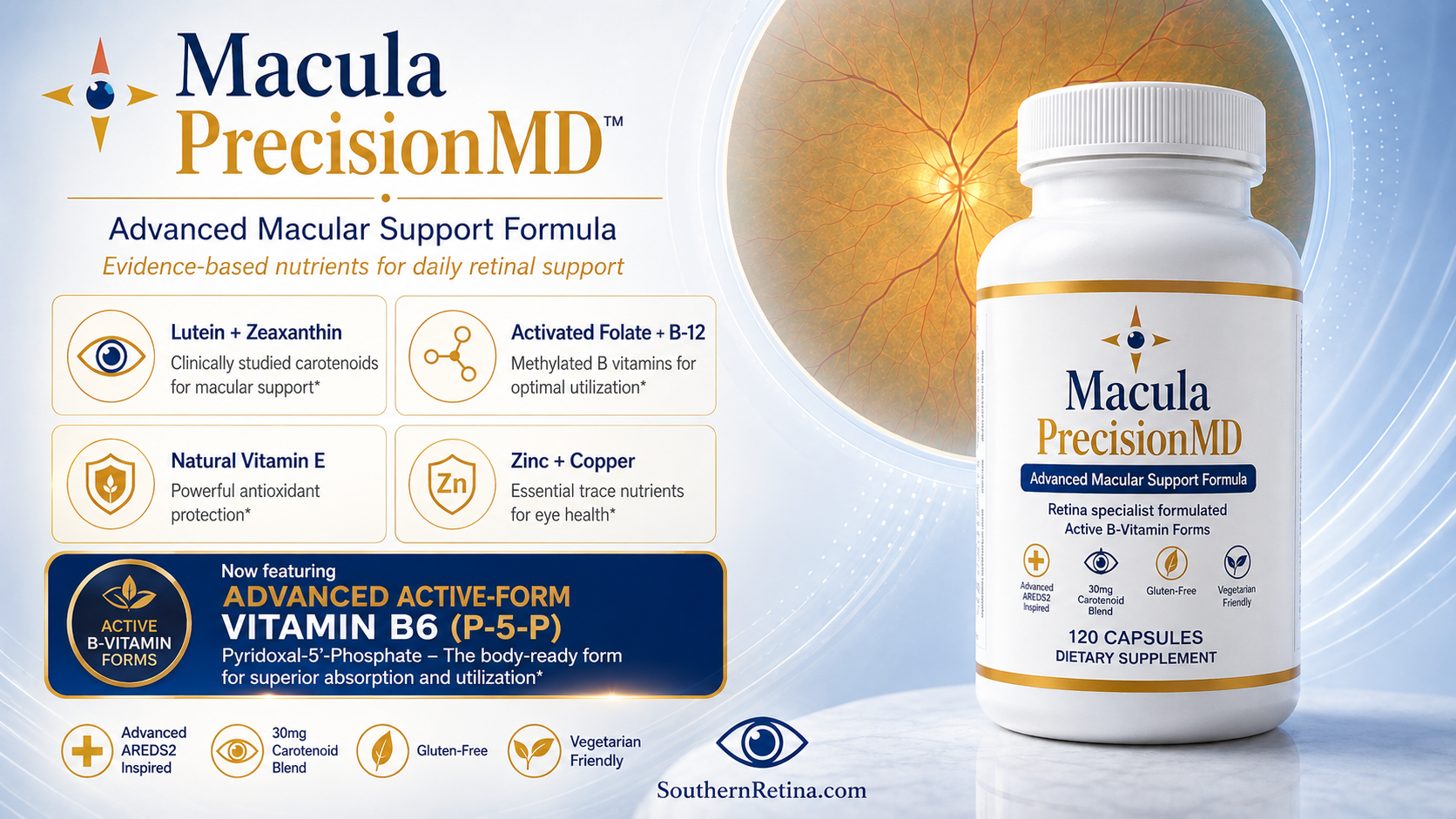
A multi-vitamin made with the latest updated research ingredients — developed by retina specialist Dr. Charles Harris.
Temporarily Out of Stock — a new updated vitamin will be available soon.
Patient example taking our vitamins
Disclaimer: These statements have not been evaluated by the Food and Drug Administration. This product is not intended to diagnose, treat, cure, or prevent any disease.

A patient's right macula just starting the vitamins. Notice the cluster of drusen.

Nine months after starting the vitamins the patient's drusen have vastly improved.

15 months after starting the vitamins, the drusen are almost completely gone.
Disclaimer: These statements have not been evaluated by the Food and Drug Administration. This product is not intended to diagnose, treat, cure, or prevent any disease.
Available soon — sign up on our Shopify site to be notified when this new updated vitamin is available.
Why I Built It This Way
The Bottle That Started This Was My Father's
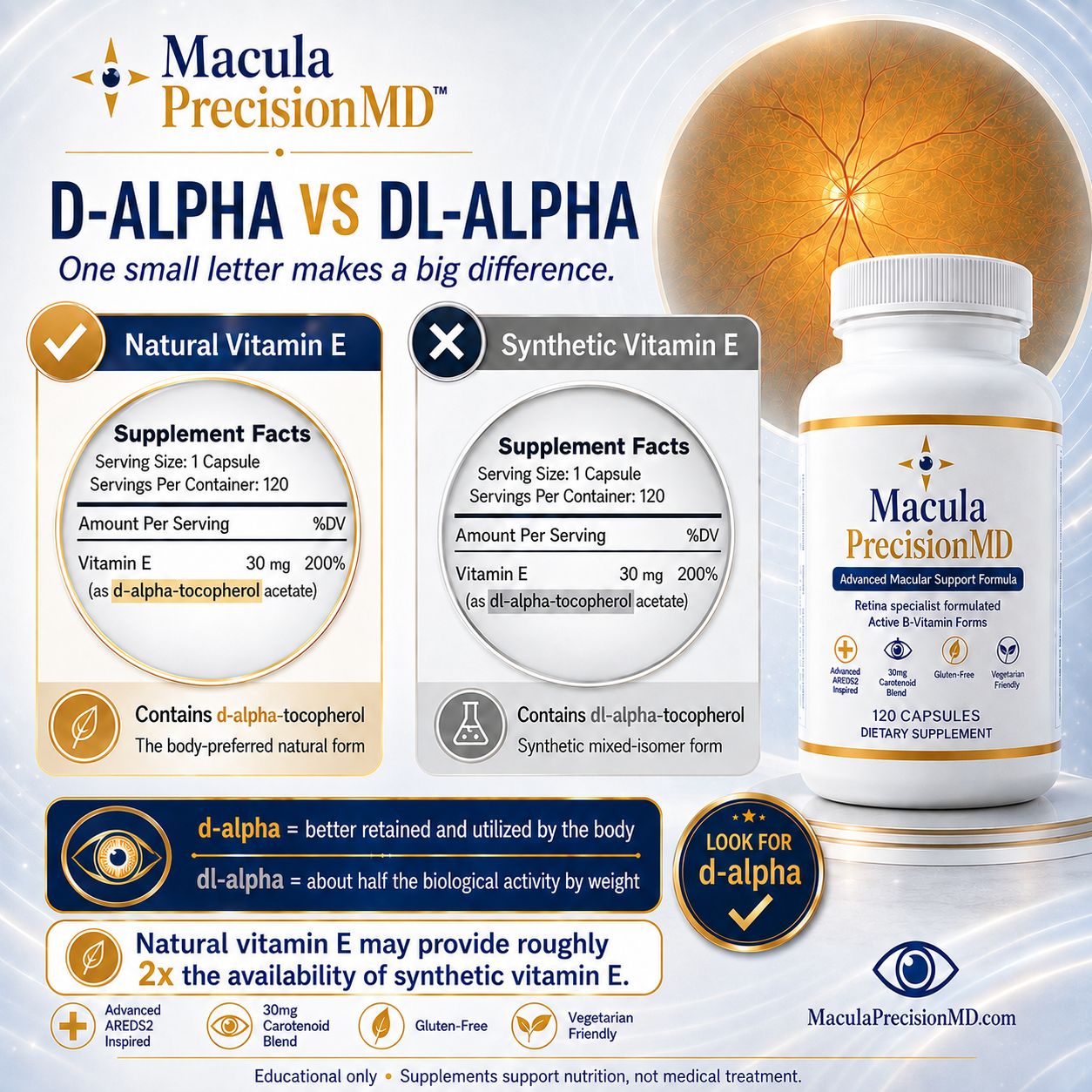
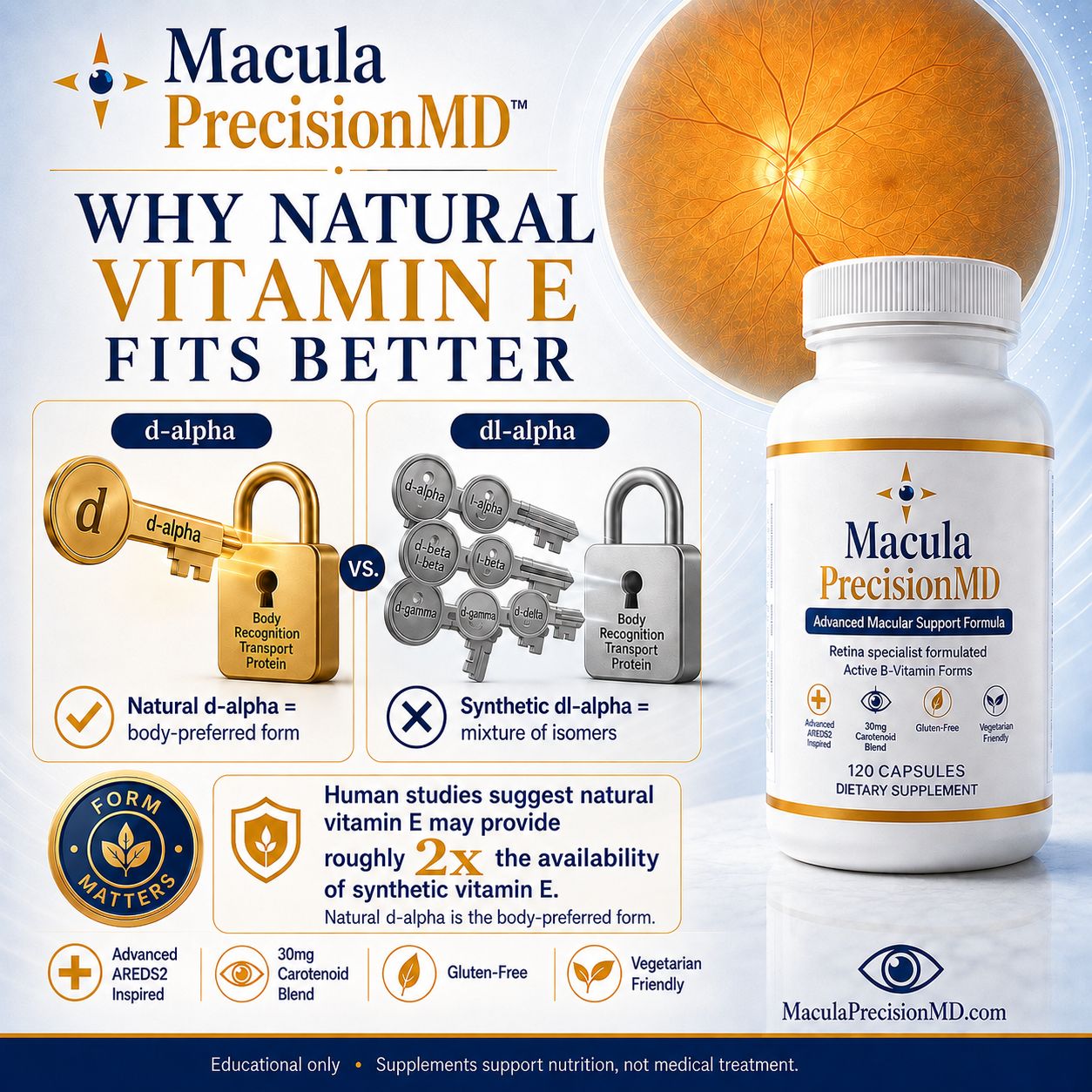
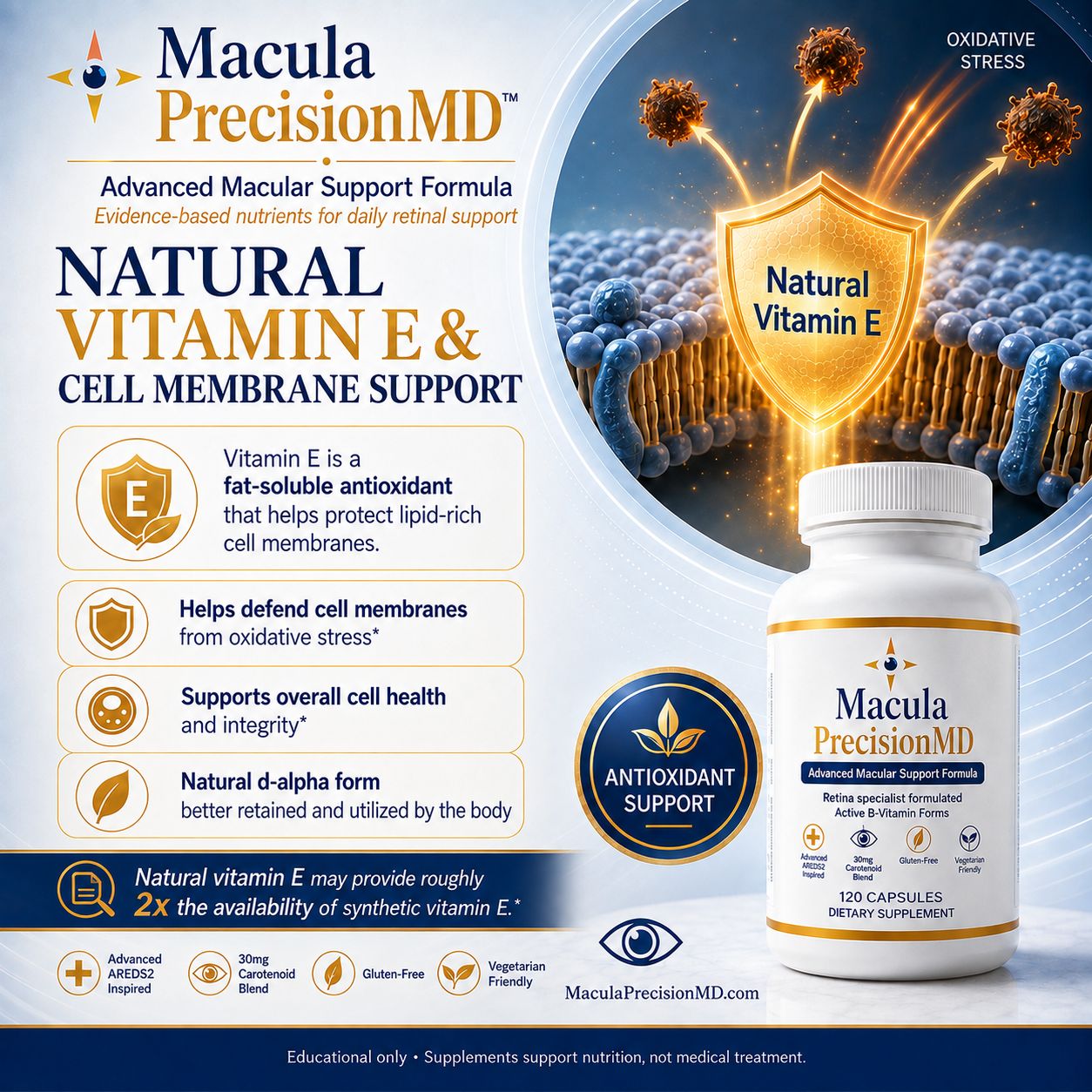
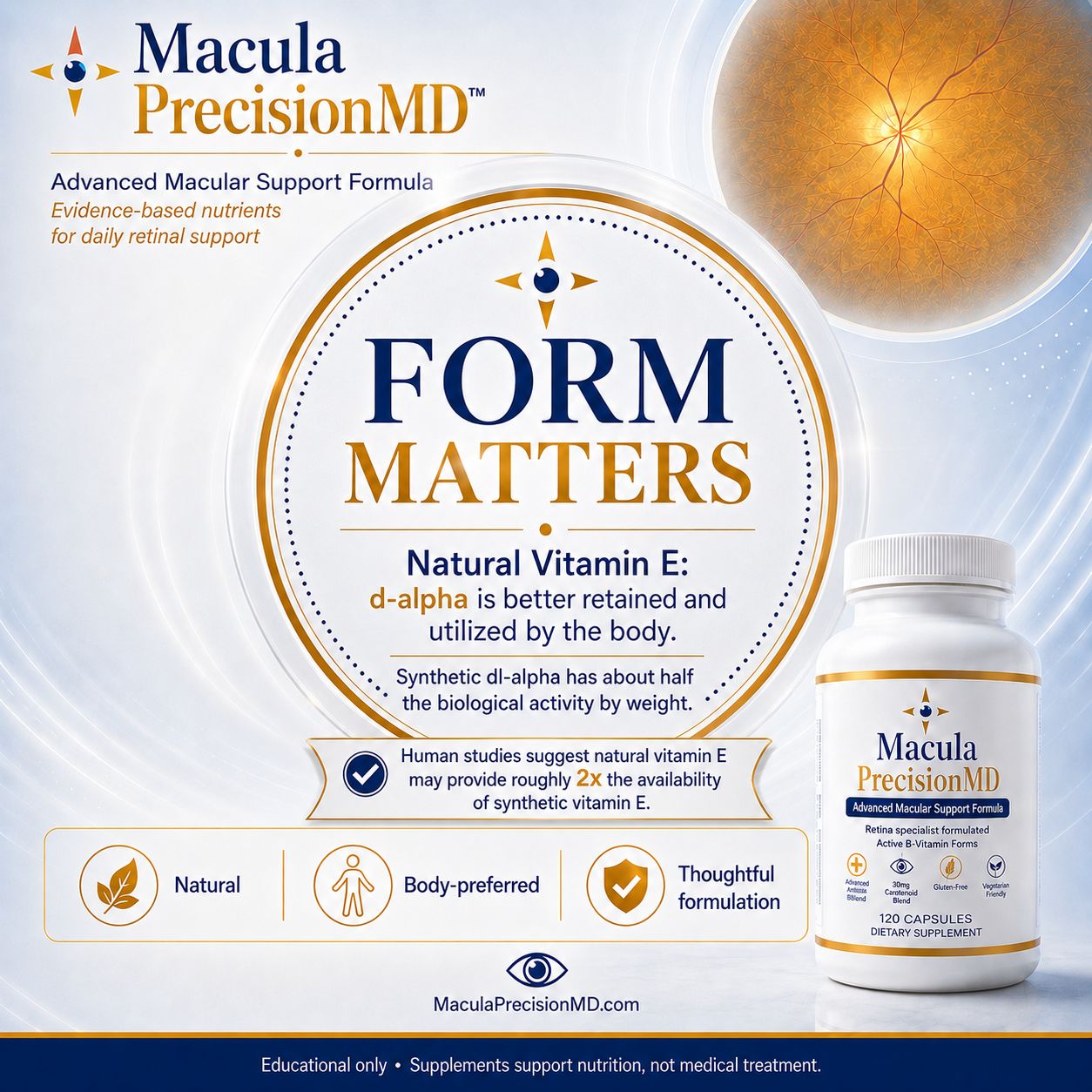
He was in his seventies. There was an eye vitamin on his kitchen counter, and one afternoon I picked it up and read the back. Folic acid. Cyanocobalamin. Zinc oxide. dl-alpha tocopherol. Every vitamin you would expect was there, but not in the forms I wanted for him.
After a career caring for the retina, I knew other forms existed. So I built the formula I wanted my own father to take. Macula PrecisionMD is our new, updated formula — created after we stopped selling our previous Eye Nutrition Formula caplet — and it now is a capsule with P5P, the active form of vitamin B6.
This new product supports a daily routine. It does not replace an eye exam or the care your own doctor recommends.
Thoughtful Ingredients: Includes lutein, methylfolate, vitamin C, natural vitamin E, B vitamins, zinc, and copper in one daily formula.
Simpler Routine: Just 2 caplets daily with meals, helping support consistency without juggling multiple bottles.
Built by a Retina Specialist: Developed from real-world clinical experience and guided by eye-health nutrition research.
Ingredient transparency
Why active B-vitamin forms?
"Active" means the nutrient is supplied in a form that has a direct role in normal metabolism. It does not mean a larger dose or a stimulant. We chose forms that match the compounds the body uses — not simply the most common forms used in supplements.
The active coenzyme form
Pyridoxal-5'-phosphate, or P5P, is an active coenzyme form of vitamin B6. Vitamin B6 coenzymes participate in more than 100 enzyme reactions, including protein metabolism.
The main form in the blood
5-MTHF is the principal form of folate in plasma. Some people have reduced ability to convert folate to this form, although individual benefit from choosing it can vary.
A metabolically active form
Methylcobalamin is one of the active forms of vitamin B12. Cyanocobalamin can also become active after conversion; current evidence does not show that B12 absorption is better simply because it is methylcobalamin.
Patient Education
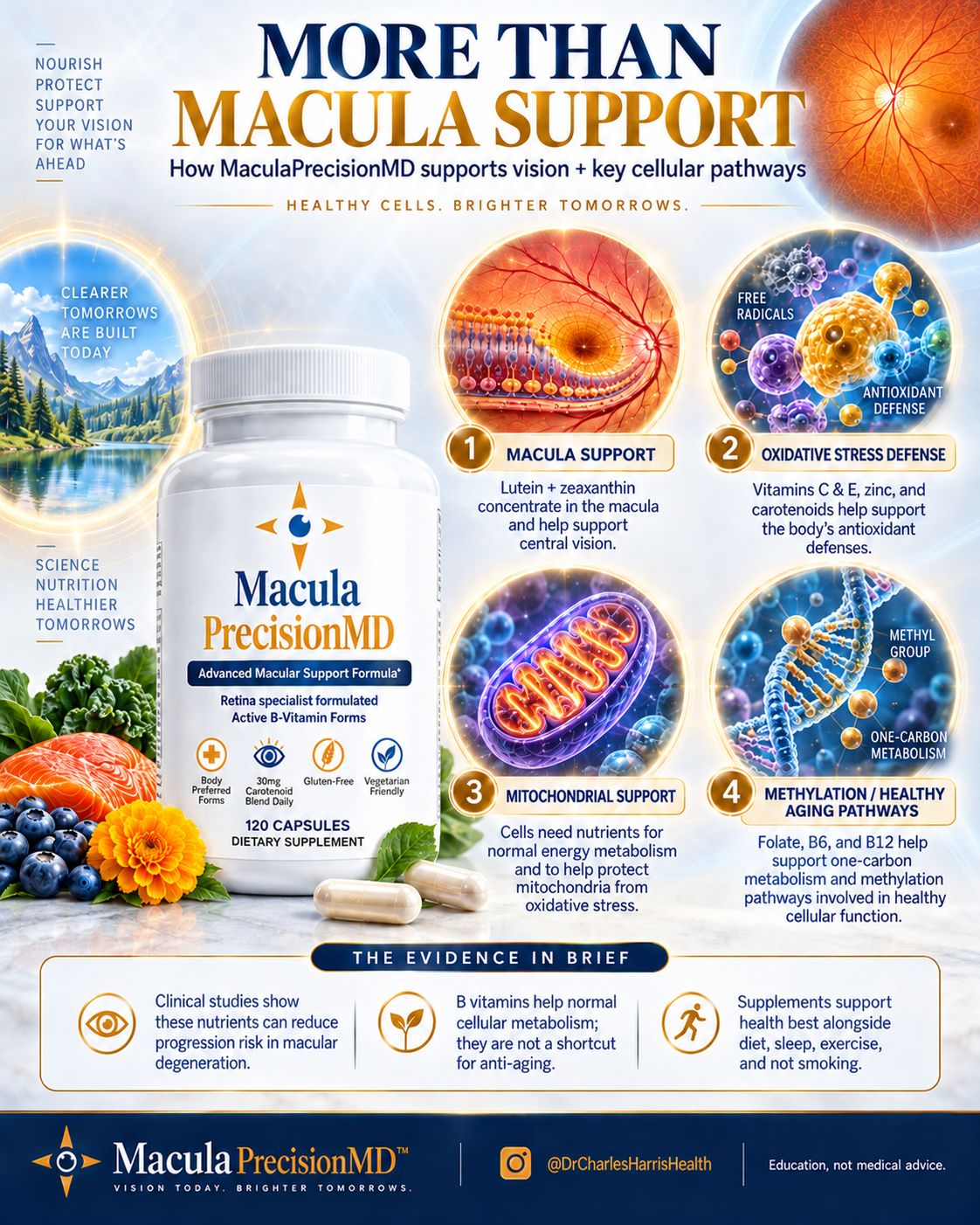
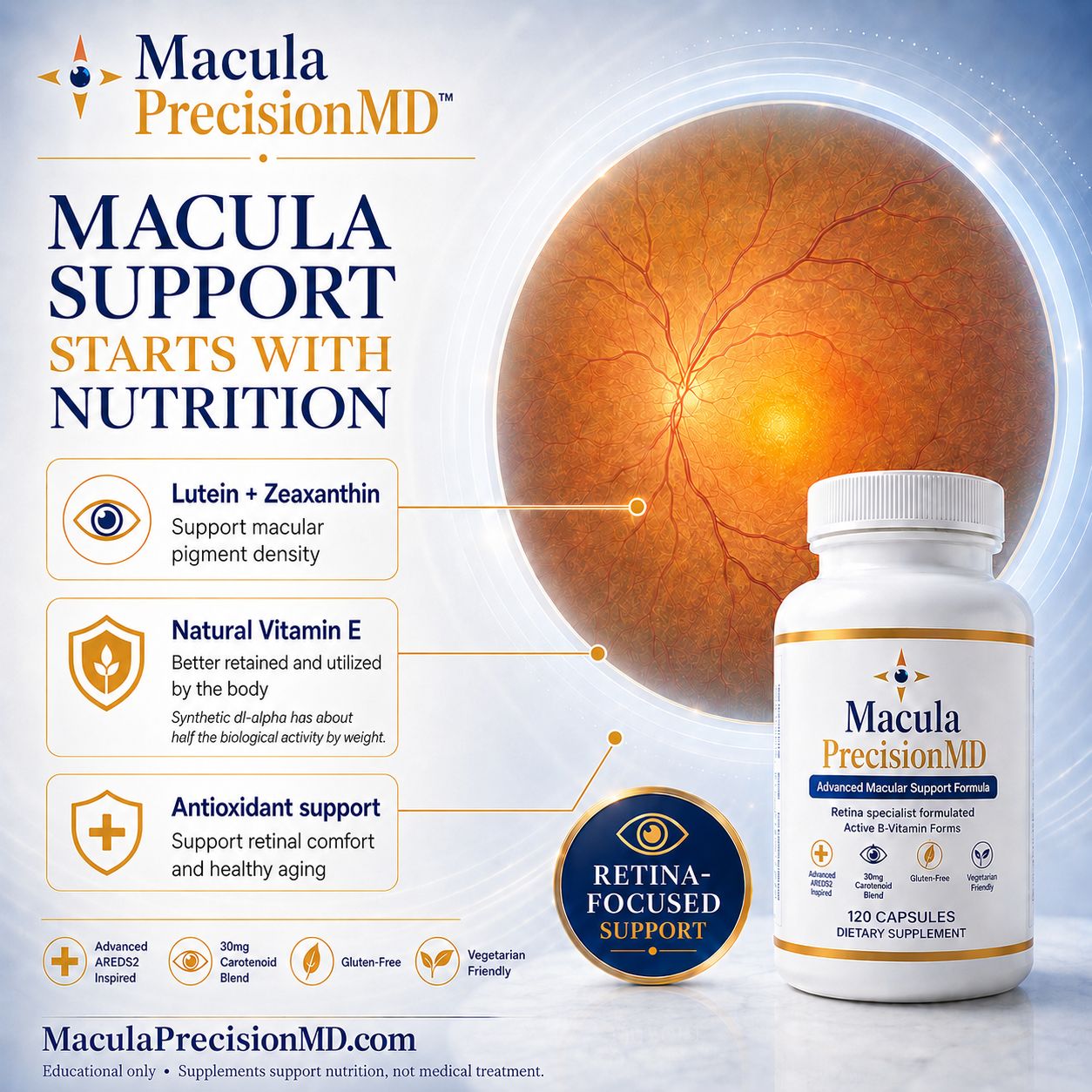
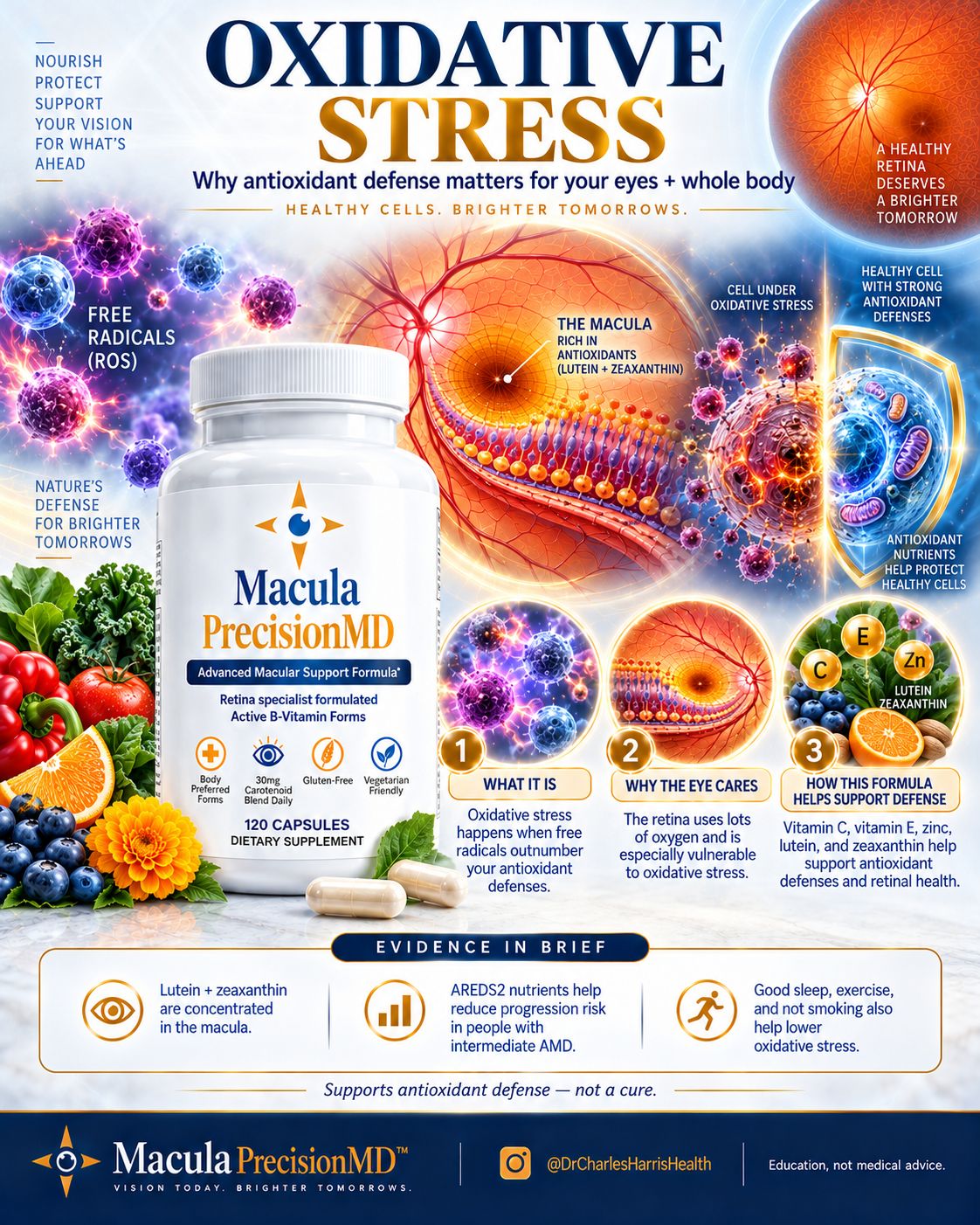
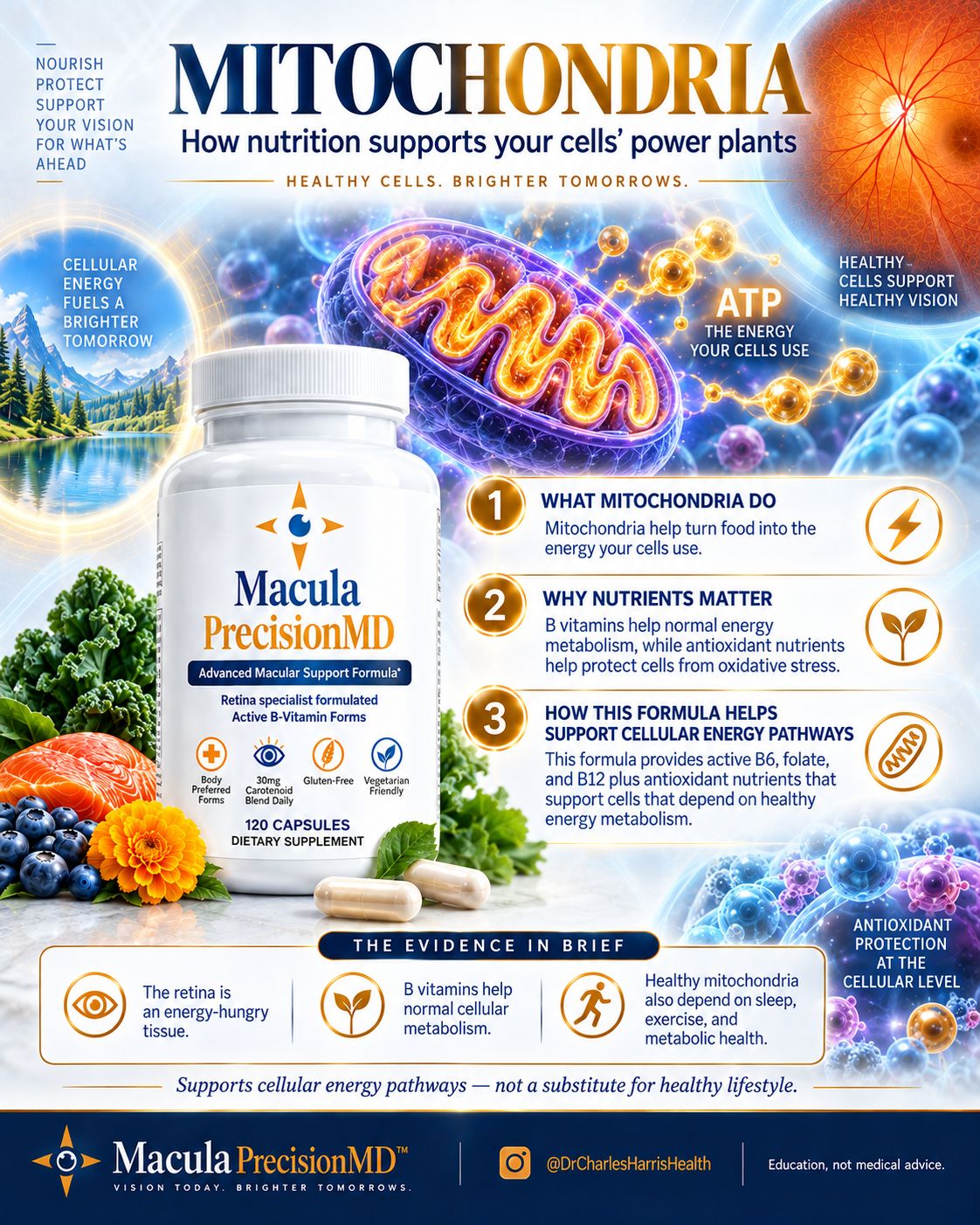
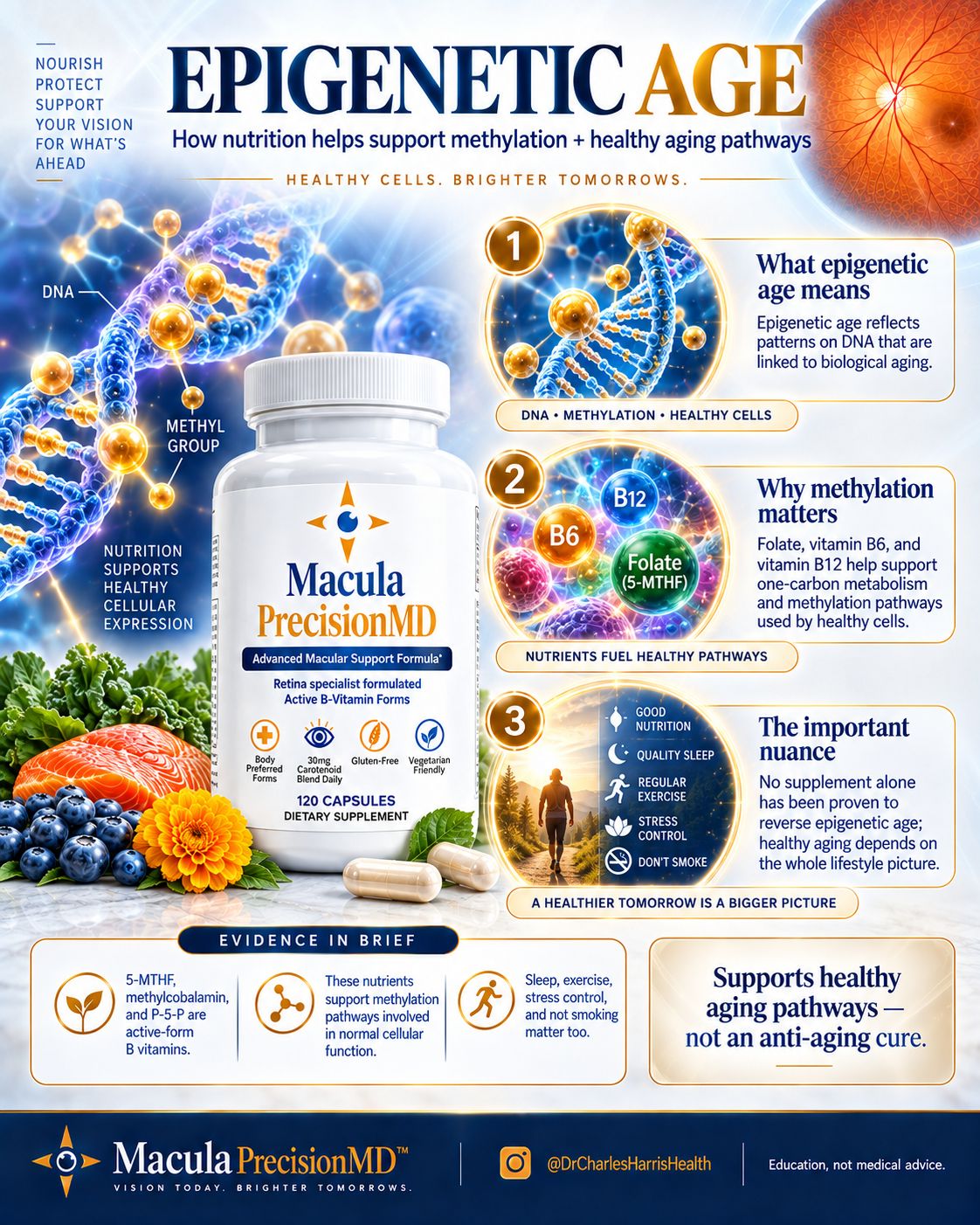
Macula PrecisionMD — Information Slides
Questions About Your Nutritional Plan?
Check out our social media education at DrCharlesHarrisHealth on Instagram and Facebook